
How Blast Sensors Help Improve Mine Safety and Operational Control
Blasting is one of the most powerful — and most hazardous — activities in mining. It moves rock efficiently, but it also creates ground vibration, air overpressure, fumes, and dust that can put workers, equipment, and nearby communities at risk. The challenge has always been visibility: without accurate data, teams are left guessing about what a blast actually produced. Blast sensors close that gap.
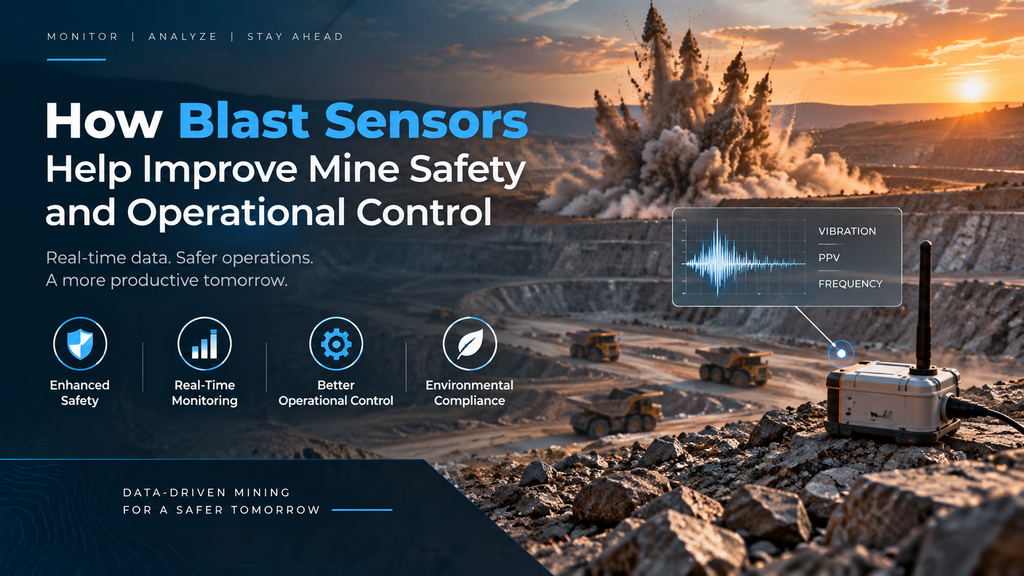
By capturing real time data before, during, and after each blast, blast sensors give mines the information they need to work safely and stay in control of operations. This guide explains what blast sensors are, how they work, and how they improve both mine safety and operational control — the twin goals of any modern blast vibration monitoring solution.
Table of Contents
- What are blast sensors?
- How they work
- Improving mine safety
- Improving operational control
- Types of blast sensors
- Best practices
- FAQs and conclusion
What Are Blast Sensors?
Blast sensors are instruments that measure the effects of blasting in and around a mine. Rather than a single device, they are a family of sensors — each monitoring a different hazard, from ground vibration to air quality. Together they turn a blast from an uncertain event into a set of accurate, measurable data points.
The best known is the vibration sensor, which measures ground vibration and peak particle velocity (PPV). But modern mines also deploy air overpressure, gas, and dust sensors, building a complete picture of each blast’s impact on safety and health.
How Blast Sensors Work
The principle is straightforward. Sensors placed at key locations detect the vibration, pressure, and air-quality effects of a blast and convert them into data. That data is captured and, in modern systems, streamed in real time to a central platform, so data collection happens automatically for analysis and alerting.
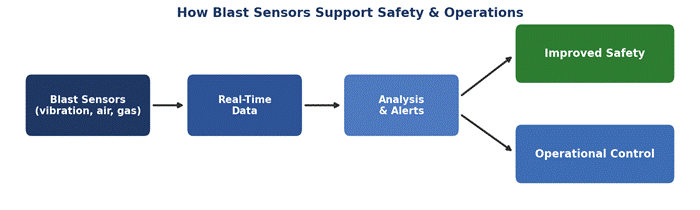
This flow of sensor data drives two outcomes at once: it protects people by flagging hazards, and it gives managers the information to run operations smoothly. Feeding it through IoT sensors and smart sensors makes real-time monitoring practical across a whole site.
How Blast Sensors Improve Mine Safety
Safety is the first reason mines invest in blast sensors, and the impact is direct. By measuring what each blast actually produces, sensors help in reducing the risk to workers, structures, and the surrounding community in several ways:
- Protecting structures: vibration monitoring keeps ground movement below levels that could damage buildings.
- Safe re-entry: gas and air quality sensors confirm that post blast fumes have cleared before anyone returns.
- Healthier air: dust and gas data supports ventilation systems and aids improving safety and health for workers.
- Meeting safety standards: accurate, logged data proves the operation is working within regulatory safety standards.
Because the data is captured in real time, hazards are caught immediately rather than discovered too late — a core benefit explored in our guide on real-time blast monitoring.
How Blast Sensors Improve Operational Control
Beyond safety, blast sensors give mines far tighter operational control. The same accurate data that protects people also helps run the operation more efficiently and predictably:
- Fewer operational delays: clear, data-backed re-entry decisions avoid unnecessary waiting after a blast.
- Better blast design: vibration and pressure data helps refine future blasting operations for better fragmentation.
- Operational efficiency: optimised blasts mean less rework, smoother downstream processing, and steadier output.
- Evidence and accountability: accurate records resolve disputes quickly and support continuous improvement.
In short, blast sensors turn each blast into a feedback loop — every event produces data that makes the next blast safer and more efficient.
Types of Blast Sensors
Most operations combine several sensor types, each covering a different hazard:
| Blast sensor | What it monitors | Main benefit |
| Vibration / PPV sensor | Ground vibration and peak particle velocity | Protects nearby structures, proves compliance |
| Air overpressure sensor | The pressure wave (air blast) | Limits noise and window damage |
| Gas / air quality sensor | Post-blast fumes and air quality | Safe re-entry for workers |
| Dust sensor | Airborne dust after a blast | Health protection and environmental control |
Best Practices
To get the most from blast sensors, place them at the most sensitive locations — the nearest structures and the areas workers re-enter first. Know the safety standards and vibration limits that apply to your site, keep instruments calibrated, and record every blast, not just the large ones. Above all, use real time monitoring where possible: the faster the data reaches decision-makers, the more it protects both people and production.
Conclusion
Blast sensors do far more than tick a compliance box. By measuring exactly what each blast produces and delivering that data in real time, they protect workers and communities while giving mines the control to operate efficiently. Safety and operational performance stop being a trade-off and start reinforcing each other.
As mining continues to modernise, sensor-driven blasting is becoming the standard. A complete blast vibration monitoring solution brings vibration, air, and dust monitoring together — turning every blast into safer, smarter, and more controlled operations.
Improve Mine Safety with Brilliant Info Systems
Brilliant Info Systems provides a complete blast vibration monitoring solution — powered by IoT and smart sensors with real-time data and alerts. Contact our team to improve safety and operational control across your mine.
Frequently Asked Questions
What are blast sensors used for?
Blast sensors measure the effects of blasting — ground vibration, air overpressure, gas, and dust — to protect workers and nearby structures, confirm safe re-entry, and give mines the data to run blasting operations efficiently.
How do blast sensors improve safety?
They provide accurate, real-time data on vibration and air quality, so hazards are caught immediately — keeping ground movement within safe limits, confirming fumes have cleared before re-entry, and proving compliance with safety standards.
How do blast sensors improve operational control?
By turning each blast into measurable data, they reduce operational delays through confident re-entry decisions, help refine blast design, and improve overall operational efficiency and output.
What do blast sensors measure?
Depending on the type, they measure ground vibration and peak particle velocity, air overpressure, post-blast gases and air quality, and airborne dust — together giving a full picture of a blast’s impact.
Can blast sensors work in real time?
Yes. Connected sensors stream data in real time to a central platform, alerting teams immediately if vibration, pressure, or air quality moves outside safe limits.
Why is post-blast monitoring important?
After a blast, gas and dust can make an area unsafe. Post-blast air quality sensors confirm conditions are safe before workers re-enter, protecting health while avoiding unnecessary delays.