
Cutting Truck Turnaround Time with Dock Scheduling & Monitoring
Every minute a truck sits at your dock is money leaking out of the operation — in detention fees, idle drivers, congested yards, and goods that arrive late to the shelf. For most warehouses, the loading dock is the single biggest bottleneck in the whole supply chain. Cutting truck turnaround time is one of the fastest ways to lift throughput, and it starts with smart dock scheduling and real-time monitoring.
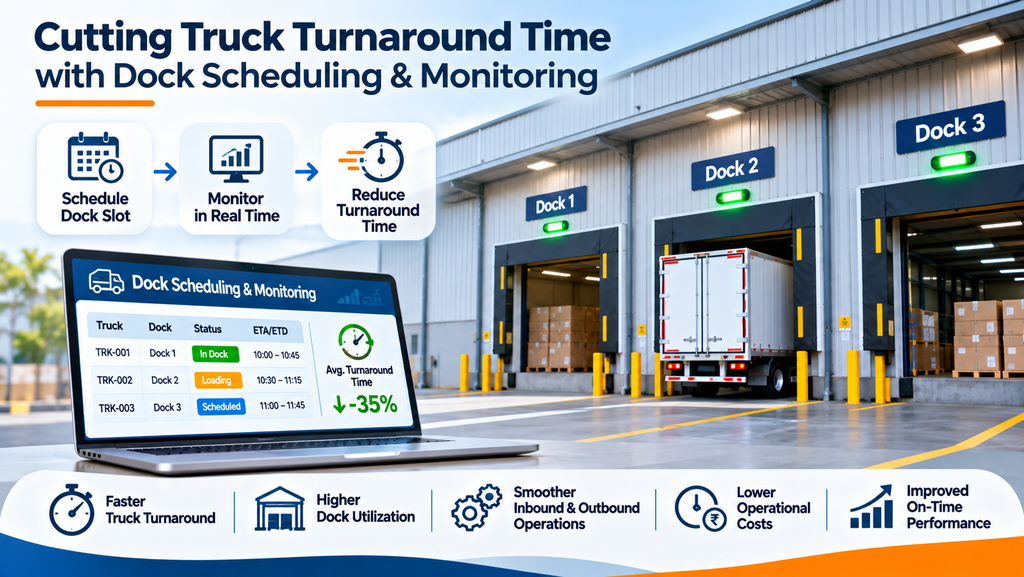
This guide explains how dock scheduling and monitoring reduces truck turnaround time — what causes slow turnarounds, how scheduling and live visibility fix them, and the benefits for cost and capacity.
▶ Watch: Brilliant Info Systems on YouTube
What You’ll Learn
- Why slow truck turnaround is so costly
- How dock scheduling works
- How real-time dock monitoring helps
- The benefits for your operation
Why Slow Truck Turnaround Is So Costly
Truck turnaround time is how long a truck spends at your site — from arrival at the gate to departure after loading or unloading. When that time is long, the costs pile up quickly: carriers charge detention fees, drivers lose productive hours, the yard clogs with waiting vehicles, and dock staff lurch between idle spells and sudden rushes.
The usual culprit is poor coordination. Trucks arrive whenever they like, several land at once, and there is no clear plan for which dock handles which load. Without a schedule, the dock runs on guesswork — and guesswork is slow. The fix is to replace it with planned appointments and live visibility, so every truck has a slot, a door, and a team ready for it.
The ripple effects reach well beyond the dock itself. A truck stuck waiting ties up a trailer, a driver, and a tractor that should be back on the road earning. Inside, staff who cannot predict the next arrival swing between standing idle and scrambling under pressure, which hurts both morale and accuracy. And when inbound goods are delayed at the door, replenishment, picking, and outbound shipping all slip behind. Shaving even fifteen minutes off the average turnaround, repeated across hundreds of trucks a week, adds up to a large and recurring saving.
How Dock Scheduling Works
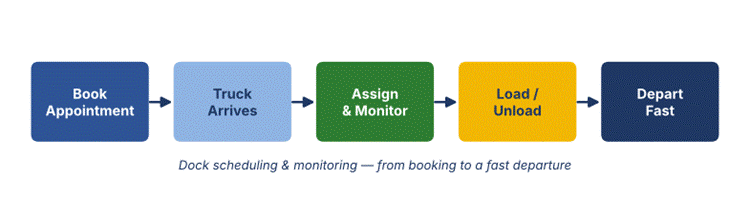
Dock scheduling replaces first-come, first-served chaos with booked appointments. Carriers reserve a time slot for each delivery or collection, and the system spreads arrivals evenly across the day so no single hour is overwhelmed:
- Appointment booking: Carriers book a dock slot in advance, matched to the right door and the staff who will handle the load.
- Load balancing: Appointments are spread across the day to avoid peaks, so labour and equipment are used evenly.
- Dock assignment: Each truck is assigned a specific dock based on load type and location, cutting confusion on arrival.
- Advance prep: Because the team knows what is coming and when, they can stage goods and labour before the truck even arrives.
Modern dock scheduling connects to your warehouse management systems and transportation management systems, so appointments line up with inventory, labour plans, and shipment statuses across the operation — turning the dock from a free-for-all into a planned, predictable flow.
How Real-Time Dock Monitoring Helps
Scheduling sets the plan; real time monitoring keeps it on track. Dock monitoring gives everyone a live picture of what is happening at every door — which docks are busy, which are free, and how long each truck has been there:
- Live dock status: See at a glance which doors are occupied, free, or running late, so you can redirect trucks instantly.
- Turnaround timing: Track how long each truck takes, flag delays as they happen, and spot the docks that need attention.
- Shipment visibility: Updated shipment statuses let staff and carriers see progress without phone calls and radio chatter.
Live data comes from dock monitoring sensors and cameras, yard management systems that track trucks across the site, and RTLS tags that locate trailers in real time. Built on reliable IoT sensors, this visibility means problems are caught and fixed in minutes, not discovered hours later.
The Benefits
Together, dock scheduling and monitoring deliver fast, measurable gains:
| Benefit | What It Means |
| Faster turnaround | Trucks are in and out quickly, freeing docks for the next load. |
| Lower detention costs | Fewer delays mean fewer carrier detention and demurrage charges. |
| Less yard congestion | Spread arrivals keep the yard clear and safe. |
| Smoother labour | Staff and equipment are used evenly instead of in rushes and lulls. |
| Happier carriers | Reliable slots and fast turnaround make you a preferred shipper. |
Because the dock sits at the junction of the yard, the warehouse, and the road, improving it lifts the whole operation. Connected to inventory visibility and ERP integration, dock scheduling and monitoring turn a chronic bottleneck into a smooth, predictable flow.
Conclusion
The loading dock is where time quietly disappears — but it does not have to. By pairing dock scheduling with real-time monitoring, warehouses replace congestion and guesswork with planned, visible, fast-moving flow. The result is cutting truck turnaround time, lower detention costs, and more capacity from the same doors. For any operation serious about efficiency, the dock is the place to start.
Brilliant Info Systems builds dock scheduling and monitoring solutions that cut truck turnaround time. Explore our dock monitoring and yard management solutions, or talk to our team to speed up your docks.
Frequently Asked Questions
What is truck turnaround time?
Truck turnaround time is how long a truck spends at your facility, from arrival at the gate to departure after loading or unloading. Cutting it lowers detention costs, frees dock capacity, and keeps the supply chain moving faster.
How does dock scheduling reduce turnaround time?
By replacing first-come, first-served arrivals with booked appointments spread across the day. Each truck gets a slot, a door, and a prepared team, so loading starts immediately instead of waiting in a queue — directly cutting truck turnaround time.
What does dock monitoring add?
Real-time dock monitoring shows live status at every door and tracks how long each truck takes. It lets you spot delays instantly, redirect trucks to free docks, and share accurate shipment statuses — keeping the schedule on track.
Does it integrate with my existing systems?
Yes. Good dock scheduling connects to warehouse management systems and transportation management systems, so appointments, inventory, and labour plans stay in sync across the operation.