
Warehouse Slotting Optimization: Placing SKUs for Faster Picking
In most warehouses, pickers spend more time walking than picking. Study after study shows that travel is the single biggest drain on picking efficiency — and the cause is almost always poor slotting. Warehouse slotting optimization fixes this at the root: by placing SKUs in the smartest locations, you cut the distance pickers walk and get orders out the door faster, without adding a single person or robot.
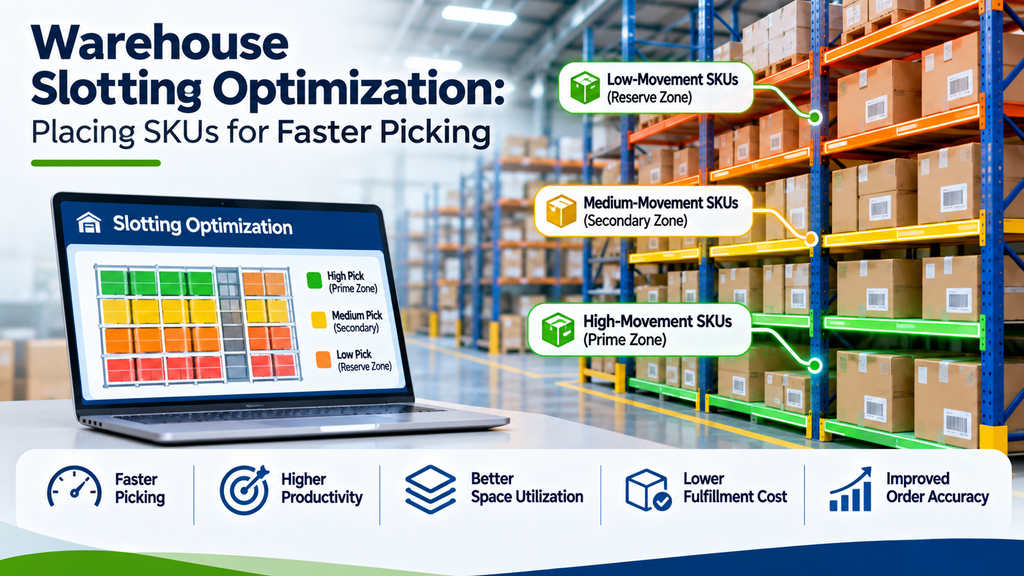
This guide explains warehouse slotting optimization — what it is, how placing SKUs for faster picking works, and the benefits it delivers for any distribution center.
▶ Watch: Brilliant Info Systems on YouTube
What You’ll Learn
- What warehouse slotting is
- How to slot SKUs for faster picking
- The benefits of slotting optimization
- How to keep slotting optimized over time
What Is Warehouse Slotting?
Slotting is the process of organizing inventory — deciding exactly where each SKU lives in the warehouse. Slotting optimization takes it further: it places every item in the storage location that minimises picker travel and makes the best use of storage space. Done well, it is one of the highest-return improvements in warehouse management, because it costs little and speeds up every single pick.
The core idea is simple: put the items you pick most often in the easiest places to reach. A fast moving product buried at the back of the building forces thousands of long walks a month; moved near dispatch, it saves that time on every order. That is the essence of placing SKUs for faster picking.
How to Slot SKUs for Faster Picking
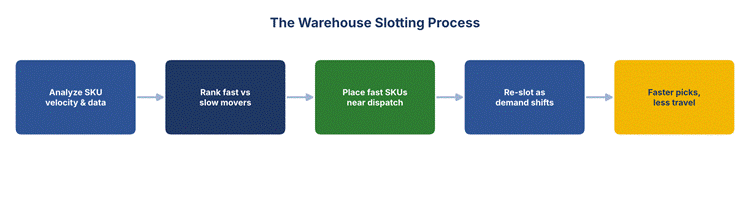
Successful slotting follows a clear, data-driven process:
- Analyse SKU velocity: Use order data to rank items by how often they are picked — your fast, medium, and slow movers.
- Place fast movers first: Put the highest-velocity SKUs closest to packing and dispatch, at easy-to-reach heights, to cut travel distances.
- Group related items: Store products often ordered together nearby, so one trip collects more of the order.
- Mind size and weight: Keep heavy or bulky items low and accessible, balancing speed with safety and storage capacity.
- Re-slot regularly: Demand changes, so moving SKUs to keep the layout optimal is an ongoing job, not a one-off.
Many warehouses use slotting software to crunch the data and recommend the best placement, especially where thousands of SKUs make manual analysis impractical. The goal of every method is the same: an arrangement that reduces picker travel time on the orders you actually ship.
The Benefits of Slotting Optimization
Good slotting pays off across the whole operation:
| Benefit | What It Means |
| Faster picking | Less walking means more picks per hour and quicker order turnaround. |
| Lower labor costs | The same team handles more volume, reducing travel-driven overtime. |
| Better space use | Smart placement improves storage capacity and warehouse efficiency. |
| Fewer errors & injuries | Logical layouts and safe heights reduce mistakes and strain. |
| Happier teams | Warehouse teams waste less effort and get more done. |
Because slotting works on travel — the biggest cost in picking — the gains are large and immediate, which is why so many teams start here when they want to improve picking across the operation. It also amplifies every other investment: pick-to-light, put-to-wall, and ASRS all perform better when SKUs are slotted well, and accurate inventory visibility makes the velocity analysis possible in the first place. A small slotting project often delivers more, faster, than an expensive new system bolted onto a poor layout.
Keeping Slotting Optimized
Slotting is not “set and forget.” As products launch, seasons change, and demand shifts, yesterday’s perfect layout slowly drifts. The best warehouses review slotting regularly — using fresh order data to re-rank SKUs and adjust placements. Live data from RTLS and forklift tracking, built on IoT sensors, shows how goods actually move, feeding smarter warehouse slotting strategies over time. Connected to your order management data, re-slotting becomes a routine tune-up rather than a major project.
Conclusion
Warehouse slotting optimization is one of the cheapest, highest-return improvements a distribution center can make. By placing SKUs for faster picking — fast movers near dispatch, related items together, and the whole layout refreshed as demand changes — you cut travel, speed up orders, and lower labor costs without new headcount or hardware. For any warehouse chasing efficiency, smarter slotting is the place to start.
Brilliant Info Systems helps warehouses optimise slotting and picking with data, tracking, and automation. Explore our inventory visibility solutions or talk to our team to pick faster with smarter slotting.
Frequently Asked Questions
What is warehouse slotting optimization?
It is the practice of placing each SKU in the storage location that minimises picker travel and best uses space — typically putting fast-moving items near dispatch — so orders are picked faster and more efficiently.
How does slotting speed up picking?
By cutting the distance pickers walk. Travel is the biggest time cost in picking, so placing high-velocity SKUs in easy-to-reach, nearby locations reduces picker travel time and raises picks per hour.
Do I need slotting software?
Not always, but it helps. For a few hundred SKUs you can slot by hand using order data; for thousands, slotting software analyses velocity and recommends placements far faster and more accurately than manual methods.
How often should I re-slot?
Review slotting regularly — quarterly is common, and more often for seasonal or fast-changing ranges. Demand shifts mean a layout that was optimal last quarter can quietly lose efficiency, so periodic re-slotting keeps the gains.