
Asset Tracking in Oil, Gccas & Heavy Industry: Visibility in Hazardous Zones
Oil, gas, and heavy industry run on expensive, mobile, and often dangerous equipment — spread across vast, remote sites where a single missing tool or vehicle can halt work and cost a fortune. Workers wear high visibility clothing to stay safe, but the assets themselves need visibility too. Asset tracking gives oil and gas operations a live, digital view of where every critical item is, even deep inside hazardous zones.
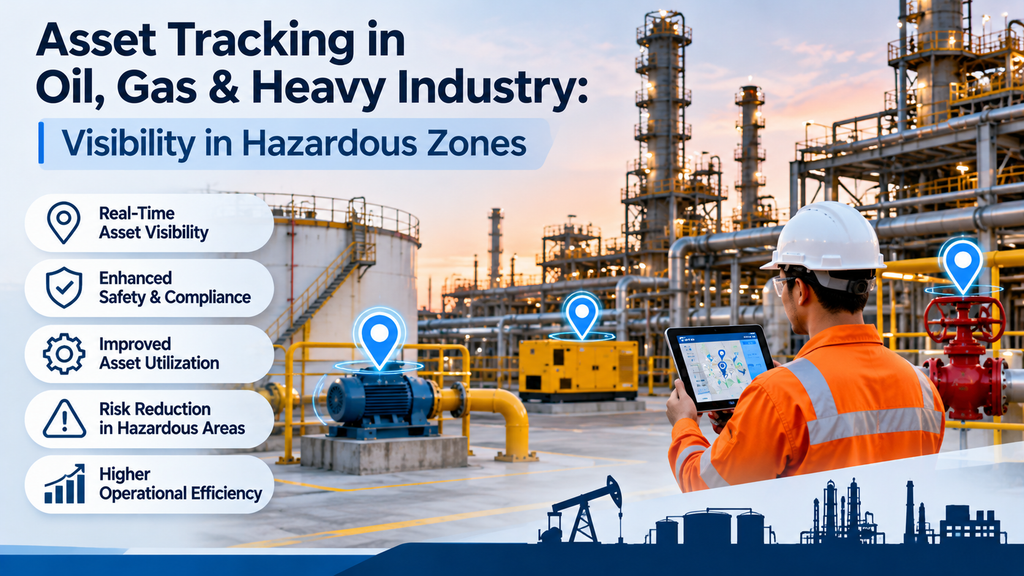
This guide explains how asset tracking in oil, gas, and heavy industry delivers visibility in hazardous zones — the challenges it solves, how it works, and the benefits for safety, cost, and efficiency.
▶ Watch: Brilliant Info Systems on YouTube
What You’ll Learn
- Why asset visibility is so hard in oil and gas
- How asset tracking works across remote, hazardous sites
- The benefits for safety, cost, and uptime
Why Asset Visibility Is So Hard
Few environments are tougher to track than an oil and gas site. Assets are scattered across huge, often remote locations; conditions are harsh; and large parts of the site are hazardous zones where equipment must be certified and people must be accounted for at all times. Manual tracking methods — clipboards, spreadsheets, and the occasional barcode scan — simply cannot keep up.
The cost of poor visibility is high. Expensive tools and equipment go missing, driving up replacement costs; crews waste hours searching instead of working; and in an emergency, not knowing who or what is inside a hazardous area is a serious safety risk. For operations managers at oil and gas companies and oilfield services firms, this uncertainty is a daily drag on productivity and safety.
How Asset Tracking Works
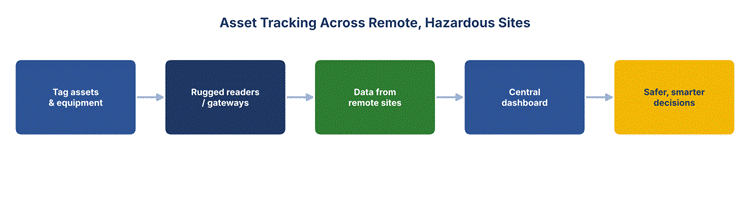
Modern asset tracking technologies replace guesswork with live data. Each asset carries a rugged tag, and readers or gateways — built to operate safely in hazardous areas — pick up its signal and feed a central dashboard:
- Tag the assets: Tools, vehicles, and equipment get durable tags rated for harsh, hazardous environments.
- Read across the site: Fixed and mobile readers capture tag data, even at remote sites with limited infrastructure.
- Centralise the data: All readings flow to central systems, giving one real time view of every asset.
- Act on it: Teams locate assets instantly, get alerts on movement, and know exactly what is where.
Different technologies suit different needs: RFID for fast identification at gates and stores, and real-time RTLS using UWB or BLE for live positioning. Together they form complete asset tracking solutions built on rugged IoT sensors.
The Benefits
Asset tracking pays off across safety, cost, and uptime in oil and gas operations:
| Benefit | What It Means on Site |
| Improved safety | Know who and what is in a hazardous zone, and clear it fast in an emergency. |
| Lower replacement costs | Fewer lost or stolen tools and high-value equipment. |
| Less downtime | Find critical assets instantly instead of halting work to search. |
| Better maintenance | Location data supports preventive maintenance, so gear is serviced on time. |
| Full accountability | A complete record of every asset for audits and compliance. |
The safety gains are the headline. Combined with PPE detection and anti-collision systems, asset and personnel tracking makes hazardous areas far safer — and supports preventive maintenance that keeps critical equipment running.
Choosing the Right System
Not every oil and gas asset needs the same treatment, so the best deployments match the technology to the value and risk of what they track. A few principles help:
- Start with the critical and the costly: Tag high-value equipment and anything used in hazardous zones first, where the safety and replacement-cost payback is biggest.
- Choose rugged, certified hardware: Tags and readers must be rated for the harsh, explosive-risk conditions of oil and gas sites.
- Integrate with your other systems: Connect tracking to your maintenance and asset management software so location data drives real action, not just a map.
A good partner will help you pick the right mix of asset tracking technologies and scale it across more sites over time, so visibility grows with the operation rather than stopping at one yard.
Conclusion
In oil, gas, and heavy industry, you cannot protect or make the most of assets you cannot see. Asset tracking brings real time visibility to even the most remote and hazardous sites — cutting replacement costs, reducing downtime, and, above all, keeping people safe. With the right tracking in oil and gas, every tool, vehicle, and crew member is accounted for, turning dangerous uncertainty into confident control.
Brilliant Info Systems builds rugged asset tracking solutions for oil, gas, and heavy industry, from hazardous-zone equipment to fleet and personnel tracking. Explore our asset tracking and RTLS solutions, or talk to our team to gain full visibility across your sites.
Frequently Asked Questions
What is asset tracking in oil and gas?
It is the use of tags, readers, and asset tracking software to monitor the real time location of tools, vehicles, and equipment across oil and gas sites — including remote and hazardous areas — so teams always know what is where.
Can asset tracking work in hazardous zones?
Yes. Tags and readers rated for hazardous areas let you track equipment and personnel safely inside them. This is one of the biggest benefits — knowing who and what is in a dangerous zone at any moment, especially during an emergency.
How does it work at remote sites with poor connectivity?
Gateways buffer and forward data, and gas asset tracking systems are designed to run at remote sites with limited infrastructure, syncing to central systems when a connection is available — so visibility holds even off-grid.
What is the return on investment?
Mainly from reduced replacement costs, less downtime spent searching, and improved safety and compliance. For asset-heavy oil and gas companies and oilfield services firms, these add up quickly across fleet tracking and equipment management.