
Why Real-Time Blast Monitoring Is Critical for Modern Mining Operations
Picture two mines. In the first, a blast goes off and the crew waits until the next day to download the vibration data — only to discover the blast exceeded safe limits and a nearby home now has a complaint on file. In the second, the same blast triggers an instant alert the moment vibrations climb too high, and the team adjusts the next blast before anything goes wrong. That difference — waiting versus knowing now — is why real-time blast monitoring has become critical for modern mining operations.
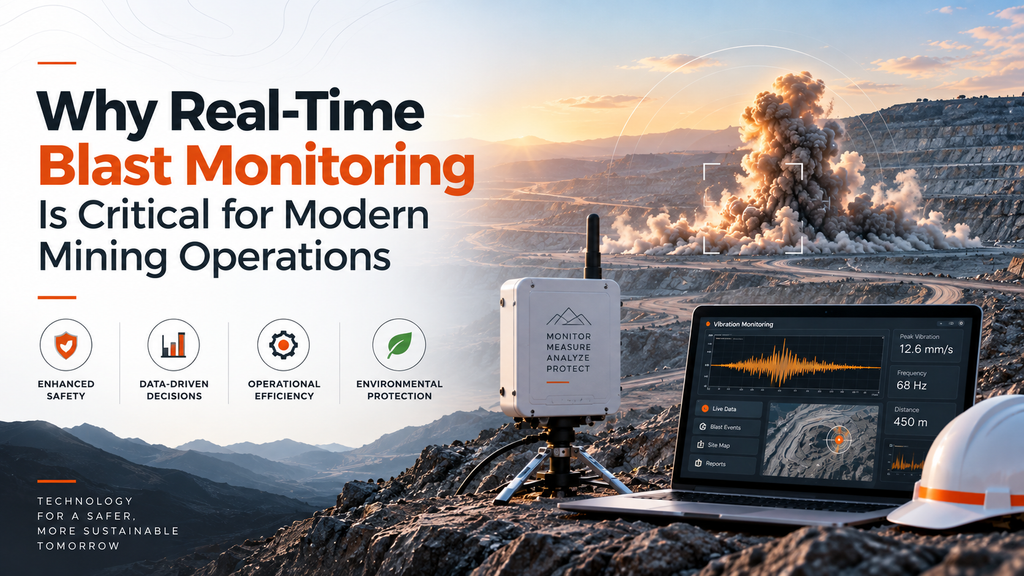
Traditional, after-the-fact checks simply cannot keep pace with today’s blasting operations. This guide explains what real-time vibration monitoring is, how it works, and the concrete benefits that make it essential for safe, compliant, and efficient mining. It also shows how a purpose-built blast vibration monitoring solution brings it all together.
| Key Takeaways •Real-time blast monitoring delivers vibration data instantly, not hours or days later. •Instant alerts let teams act before a blast causes damage or a compliance breach. •Continuous, unattended monitoring protects sensitive sites around the clock. •AI-powered analysis turns raw vibration data into fast, reliable decisions. |
Table of Contents
- What is real-time blast monitoring?
- Traditional vs real-time
- How it works
- Why it’s critical
- The key benefits
- Beyond blasting: predictive maintenance
- FAQs and conclusion
What Is Real-Time Blast Monitoring?
Real-time blast monitoring uses connected vibration sensors and modern sensor technology to measure and report ground vibration the instant a blasting event occurs. Built on the internet of things (IoT), it relies on continuous, real time data collection from every sensor on site. Instead of recording data for someone to review later, the system streams live readings to a dashboard and analyses them on the spot — flagging any blast that approaches or exceeds safe limits.
In short, it replaces “check it tomorrow” with “know it now.” Continuous monitoring means every blast, at every sensitive location, is captured and assessed automatically, giving operators an always-on view of their vibration impact. Because the data flows in without anyone having to be present, it also frees skilled staff from routine data collection to focus on decisions that actually improve blasting outcomes.
Traditional vs Real-Time Monitoring
The gap between old and new approaches is stark. Traditional monitoring tells you what happened; real-time monitoring lets you do something about it. This comparison makes the difference clear:
| Aspect | Traditional monitoring | Real-time monitoring |
| When you get data | Hours or days after the blast | Instantly, as it happens |
| Response to a problem | After the damage is done | Immediate alert, act at once |
| Coverage | Single blast, one operator | Continuous, unattended, 24/7 |
| Data collection | Manual download and review | Automatic, streamed to a platform |
| Analysis | Reviewed later by hand | AI powered, instant vibration analysis |
| Best for | Occasional, low-risk blasting | Modern, high-tempo mining operations |
For an occasional, low-risk blast, manual checks may be enough. But for busy modern operations near communities or infrastructure, only real-time monitoring provides the speed and coverage the situation demands.
How Real-Time Blast Monitoring Works
The system runs as a continuous loop, from the blast to an alert on someone’s phone:
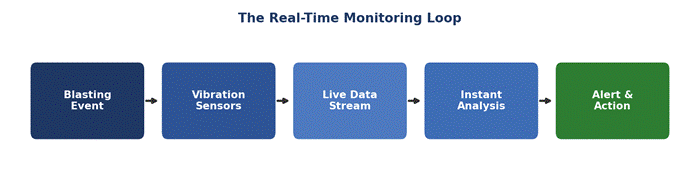
A blasting event sends vibrations through the ground; vibration sensors and seismographs, the core monitoring equipment, record the peak particle velocity (PPV) and other readings; the readings stream live to a blast vibration monitoring solution via connected IoT sensors; fast data processing and instant analysis compare them against safe limits; and if anything looks wrong, the system alerts the team immediately. Because this happens in seconds, problems are caught while there is still time to act.
Why Real-Time Monitoring Is Critical
Three realities of modern mining make real-time monitoring essential rather than optional. First, drilling and blasting operations run at a high tempo, with frequent blasting activities that manual checks cannot keep up with. Second, mines increasingly operate close to communities, roads, and infrastructure, where a single excessive blast can cause damage and disputes. Third, regulators and communities now expect fast, transparent, defensible evidence — not a report compiled days later.
Real-time monitoring answers all three. It keeps pace with continuous blasting, protects nearby structures by catching issues instantly, and produces an always-current record that enhances safety and builds trust with regulators and neighbours alike.
The Key Benefits of Real-Time Blast Monitoring
The advantages go well beyond simply having data sooner:
- Instant alerts: teams are warned the moment vibration approaches a limit, so they can act at once.
- Enhanced safety: catching excessive vibration early protects people, structures, and equipment.
- Continuous coverage: unattended systems record vibration 24/7 at every sensitive point.
- Stronger compliance: live, time-stamped vibration data provides defensible proof for regulators.
- Smarter blast design: real-time vibration analysis of blast data helps refine future blasts for better results.
- Greater operational efficiency: effective monitoring keeps blasting on schedule and avoids costly stoppages.
- Fewer disputes: objective, immediate data resolves community complaints quickly and fairly.
Beyond Blasting: Predictive Maintenance
The same continuous vibration data that protects communities also protects equipment. By feeding sensor data into predictive maintenance systems, a maintenance team can spot developing faults in machinery from changes in vibration signatures — moving from reactive fixes to preventive maintenance. This is where artificial intelligence (AI) and AI powered monitoring shine: the same real time data serves double duty, helping enhance safety and uptime across the operation.
Conclusion
Real-time blast monitoring marks the shift from reacting to problems to preventing them. By measuring ground vibration the instant a blast occurs and alerting teams immediately, it keeps modern mining safe, compliant, and trusted — while the same live data helps optimise blasts and protect equipment.
For today’s high-tempo operations, waiting until tomorrow to learn what happened is a risk few can afford. Real-time monitoring turns every blast into instant, actionable insight — which is exactly why it has become critical for modern mining operations.
Talk to Brilliant Info Systems About Real-Time Monitoring
Brilliant Info Systems offers a complete blast vibration monitoring solution powered by IoT and smart sensors, live data, and predictive maintenance analytics. Whether you need effective monitoring of a single site or a complete solution for blast monitoring across an operation, and reliable, real-time sensor-based monitoring, contact our team to discuss your operation.
Frequently Asked Questions
What is real-time blast monitoring?
It is the use of connected vibration sensors to measure and report ground vibration instantly during a blasting event, streaming live data to a platform that analyses it and alerts the team if limits are approached.
How is it different from traditional monitoring?
Traditional monitoring records data for later review, so problems are found after the fact. Real-time monitoring reports and analyses vibration instantly, letting teams respond before damage or a compliance breach occurs.
Why is real-time monitoring important for mining?
Modern mines blast frequently and often near communities. Real-time monitoring keeps pace with that tempo, catches excessive vibration instantly, and provides fast, defensible evidence for regulators and neighbours.
Can real-time monitoring run unattended?
Yes. Unattended monitoring systems with connected sensors provide continuous, 24/7 monitoring at fixed sensitive locations, automatically recording every blast and alerting the team when needed.
How does it support predictive maintenance?
The same vibration data used for blast monitoring can reveal developing faults in equipment, letting maintenance teams shift from reactive repairs to preventive maintenance based on real-time vibration analysis.
Is real-time blast monitoring worth the investment?
For most modern operations, yes. The gains in safety, compliance, fewer disputes, and equipment uptime typically outweigh the cost, especially for high-tempo mines operating near sensitive areas.