
Forklift Tracking System: Real-Time Monitoring, Safety & Optimization
In a busy warehouse, forklifts are the workhorses that keep everything moving — and also one of the biggest sources of risk and hidden cost. When you cannot see where your forklifts are, how they are being used, or when they are due for service, you get near-misses, wasted travel, and fleets that are bigger and more expensive than they need to be.
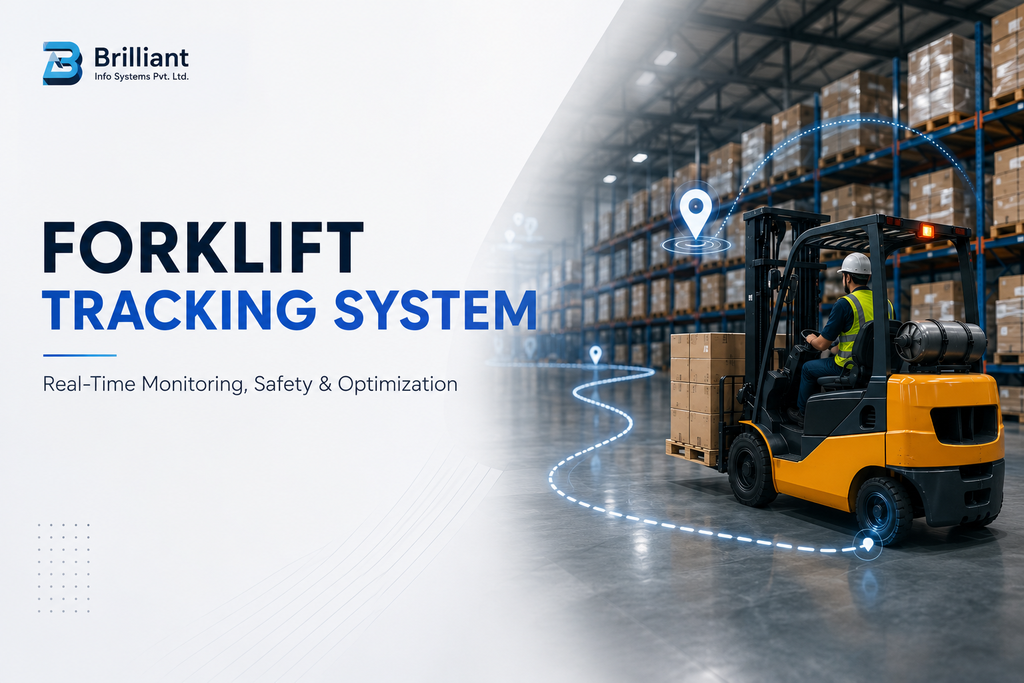
A forklift tracking system solves this by giving you real-time monitoring of every truck in your fleet. Using location data from tags and readers, it shows where each forklift is, how it is performing, and where safety or efficiency can improve. This guide explains what a forklift tracking system is, how it works, and how it delivers safety and optimisation.
▶ Watch: Forklift Tracking
Table of Contents
- What is a forklift tracking system?
- How it works
- Tracking technologies
- Key features
- Safety benefits
- Optimisation benefits
- Integration with WMS/ERP
- Applications and FAQs
What Is a Forklift Tracking System?
A forklift tracking system is a combination of hardware and software that monitors the real-time location and activity of forklifts across a facility. Each truck carries a tag, fixed readers pick up its signal, and software turns that into a live view of the whole fleet. It is essentially real-time asset tracking applied specifically to your material-handling vehicles.
Rather than guessing where trucks are or relying on manual logs, managers get accurate, live location data on every forklift — where it is, whether it is moving, and how it is being used. That visibility is the foundation for both safety and fleet optimisation.
How a Forklift Tracking System Works
The system works much like an indoor location system for vehicles. A tag on each forklift transmits a signal; fixed anchors or readers around the facility detect it; a location engine calculates the truck’s position; and tracking software displays the live fleet on a map. Many systems build on RFID and RTLS solutions to make this possible.
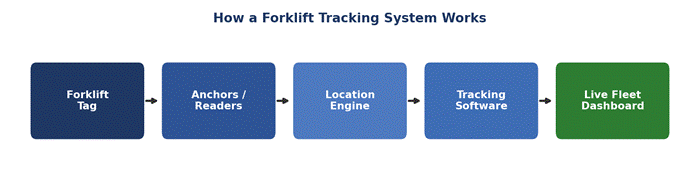
Because this happens continuously, you see forklift movements in real time, not as an after-the-fact report. The same location data is stored so you can analyse routes, utilisation, and safety events over time.
Forklift Tracking Technologies
Different technologies suit different needs, trading accuracy against cost. Most systems use one or a combination of these:
| Technology | Accuracy | Best for |
| UWB | 10–30 cm | Precise indoor forklift location |
| BLE | 1–3 m | Cost-effective zone tracking |
| RFID | Checkpoint / zone | Access points and zone presence |
UWB gives the pinpoint accuracy needed for anti-collision and precise location, BLE offers cost-effective zone tracking across large sites, and RFID is ideal for confirming forklifts at specific checkpoints and access points.
Key Features of a Forklift Tracking System
A capable forklift tracking system does far more than show dots on a map. Core features include:
- Real-time location: see every forklift’s position live across the facility.
- Speed and movement monitoring: track how trucks are driven and flag unsafe behaviour.
- Zone and access control: restrict forklifts from pedestrian or restricted areas.
- Utilisation reporting: measure how much each truck is actually used.
- Impact and event detection: record collisions and near-misses for investigation.
- Maintenance alerts: use run-hours and usage data to schedule service.
How Forklift Tracking Enhances Safety
Safety is often the first reason companies invest in forklift tracking, and the impact is direct. By monitoring speed and location, the system helps enforce safe driving and keeps trucks out of pedestrian zones. Combined with anti-collision systems and PPE detection, it creates layered protection for people on the floor.
When an incident or near-miss does occur, the recorded location data shows exactly what happened, so you can investigate and prevent a repeat. Over time, this data-driven approach steadily reduces accidents and builds a stronger safety culture.
How Forklift Tracking Optimises Your Fleet
Beyond safety, forklift tracking is a powerful optimisation tool. Utilisation reports reveal how hard each truck actually works — often showing that a fleet could be smaller, saving significant leasing and running costs. Movement data highlights unnecessary travel and congestion, so you can improve routes and reduce wasted trips.
Usage data also enables smarter, condition-based servicing through predictive maintenance, cutting breakdowns and extending truck life. And by linking forklift activity to labour management, managers can balance workloads across the team and the fleet.
Integration with WMS and ERP
Forklift tracking delivers the most value when connected to your wider operation. Linked to your WMS and ERP, forklift location data can be matched to tasks — directing the nearest truck to the next job — and tied to inventory visibility so moves are confirmed automatically. Feeding data from IoT sensors and extending tracking into yard management gives seamless visibility from the yard to the warehouse floor.
Applications Across Industries
Any operation running a forklift fleet benefits. Manufacturing plants use it to keep material flowing safely between the line and stores, while e-commerce and logistics warehouses use it to manage large fleets across high-traffic sites. Cold storage, ports, and heavy industry all rely on forklift tracking to protect people and get the most from expensive equipment.
Conclusion
A forklift tracking system turns your fleet from a blind spot into a source of insight. With real-time monitoring of every truck, it makes the warehouse safer, cuts unnecessary cost, and helps you get the most from every forklift you run.
As safety expectations rise and margins tighten, real-time forklift tracking is becoming a standard part of the well-run warehouse. The key is choosing the right technology for your site and connecting it to the systems that run your operation.
Track and Optimise Your Fleet with Brilliant Info Systems
Brilliant Info Systems designs and integrates forklift tracking and RFID solutions — with anti-collision systems, RTLS, and asset tracking — connected to your warehouse systems. Contact our team to make your forklift fleet safer and more efficient.
Frequently Asked Questions
What is a forklift tracking system?
It is a system that monitors the real-time location and activity of forklifts using tags and readers, giving managers live visibility of the whole fleet for safety and optimisation.
How does forklift tracking improve safety?
It monitors speed and location, keeps trucks out of pedestrian zones, and records collisions and near-misses. Combined with anti-collision systems, it helps prevent accidents and supports investigations.
How does forklift tracking save money?
By showing how much each truck is used, it often reveals that a fleet can be smaller, cutting costs. It also reduces unnecessary travel and enables condition-based maintenance that lowers breakdowns.
What technologies are used for forklift tracking?
Common technologies include UWB for high-precision location, BLE for cost-effective zone tracking, and RFID for checkpoint and access-point tracking. Many systems combine them.
Can forklift tracking integrate with a WMS or ERP?
Yes. Linked to your WMS and ERP, forklift location data can be matched to tasks and inventory, so the nearest truck is directed to the next job and moves are confirmed automatically.
Which industries use forklift tracking?
Manufacturing, e-commerce, logistics, cold storage, ports, and heavy industry all use forklift tracking to improve safety and get more value from their fleets.