
Selecting RTLS Tags: Asset, Vehicle, Equipment or Wearable — Which One Do You Need?
Once you have decided to deploy a real time location system, the next question is simple but important: which tags do you actually need? RTLS tags are not one-size-fits-all. The right choice depends on what you are tracking — a pallet, a forklift, a machine, or a person — because each one has different needs for size, battery life, and durability.
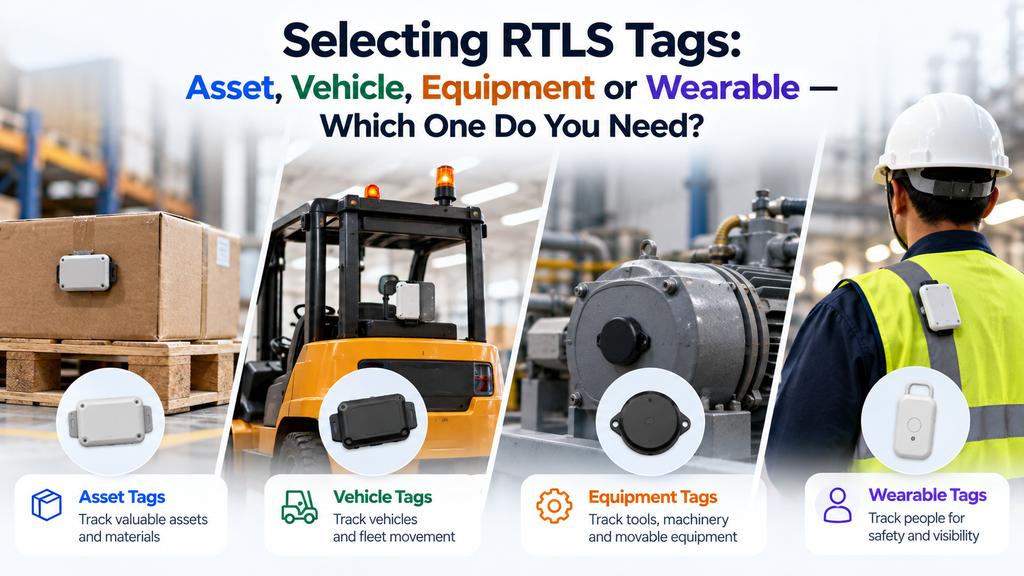
This guide walks through the four main types of RTLS tags — asset, vehicle, equipment, and wearable — so you can match the tag to the job and get the most from your rtls solution.
▶ Watch: Brilliant Info Systems on YouTube
Why Tag Choice Matters
Every tag is a small radio that broadcasts its position to the system. But a tag glued to a shipping container faces very different demands than one clipped to a worker’s belt. Picking the wrong type leads to tags that run flat too fast, fall off, or simply do not fit. Getting it right keeps your asset tracking accurate and low-maintenance for years. Two factors shape almost every decision: power consumption (which sets battery life) and how the tag attaches to what it tracks.
The Four Main Types of RTLS Tags
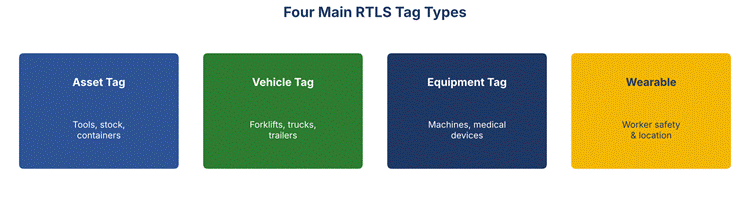
1. Asset Tags
An asset tag is the workhorse of any deployment. These are small, rugged tags attached to tools, stock, containers, and other physical assets. The assets include high-value or easily misplaced items, so the tag is built to be compact and to last. One thing to note: RTLS tracks physical things only — an intangible asset such as intellectual property cannot carry a tag, so it falls outside location tracking. For physical goods, most asset tags report their position at a steady interval, balancing update speed against battery life to keep asset tracking and inventory visibility running for years.
2. Vehicle Tags
A vehicle tag goes on forklifts, trucks, trailers, and other moving plant. Think of it as a smart, trackable version of a license plate or vehicle registration — but instead of just identifying the vehicle, it reports exactly where it is in real time. Vehicle tags are often larger and can be powered from the vehicle itself, so battery life is less of a concern. They are central to forklift tracking and yard management.
3. Equipment Tags
An equipment tag is designed for machines and specialised gear — from production-line tools to medical equipment in a hospital. These tags often need to survive heat, vibration, or cleaning, and they help teams locate shared, mobile equipment the moment it is needed. Good asset management of this kind cuts the time staff waste searching for the one device everyone needs.
4. Wearable Tags
A wearable tag is worn by a person — as a badge, wristband, or clip. Wearable devices focus on worker safety and location: they can trigger alerts in hazardous zones, support evacuation head-counts, and enable lone-worker protection. More advanced wearable technology, similar to the fitness trackers people already know, can even monitor heart rate and other vital signs where health and safety demand it. Comfort and long battery life matter most here, since people wear them all shift.
Quick Comparison
Here is how the four tag types line up at a glance:
| Tag Type | Tracks | Key Priority |
| Asset | Tools, stock, containers | Small size, long battery life |
| Vehicle | Forklifts, trucks, trailers | Durability, vehicle power |
| Equipment | Machines, medical equipment | Ruggedness, fast locating |
| Wearable | Workers / people | Comfort, safety, battery life |
How to Choose the Right Tag
Work through a few simple questions and the choice usually becomes clear:
- What are you tracking? A thing or a person? People always need wearables designed for comfort and safety.
- Is there a power source? Vehicles and some machines can power a tag directly; everything else runs on a battery, so power consumption matters.
- How harsh is the environment? Heat, moisture, and vibration call for rugged equipment or vehicle tags.
- How precise must it be? For centimeter level accuracy choose UWB tracking; for scalable, lower-cost coverage choose BLE tracking.
Most real sites mix several tag types on one platform — asset tags on stock, vehicle tags on forklifts, and wearables on staff — all managed through a single RTLS solution.
Conclusion
Choosing RTLS tags comes down to matching the tag to what you track. Asset tags cover tools and stock, vehicle tags handle forklifts and trailers, equipment tags suit machines and medical equipment, and wearables keep workers safe. Get the match right — weighing size, durability, power consumption, and battery life — and your real time location system will deliver accurate tracking with minimal upkeep.
Brilliant Info Systems helps you select and deploy the right mix of RTLS tags for your site. Explore our asset tracking solutions or talk to our team to plan your deployment.
Frequently Asked Questions
Can I use one type of tag for everything?
Usually not. A tag sized for a pallet is wrong for a worker’s wrist, and a vehicle tag is overkill for a small tool. Most deployments combine asset, vehicle, equipment, and wearable tags on a single real time location system.
What affects an RTLS tag’s battery life?
Mainly how often it reports its position — more frequent updates mean higher power consumption and shorter battery life. Tag size and the technology used (UWB or BLE) also play a part. Vehicle and some equipment tags avoid the issue by drawing power from the host.
Do wearable tags track health data?
Basic wearables focus on location and safety alerts. More advanced wearable technology can monitor heart rate and other vital signs, similar to consumer fitness trackers, where worker health and safety require it.