
Food & Beverage Traceability: Batch Tracking from Receiving to Dispatch
In food and beverage, one bad batch can become a national headline. A contamination scare, a mislabelled allergen, or a shipment that slipped past its shelf life can trigger a recall, regulatory action, and lasting damage to a brand. The only defence is traceability — knowing exactly what went into every product and where every batch ended up. Modern batch tracking makes that possible from the moment raw materials arrive to the instant finished goods leave for dispatch.
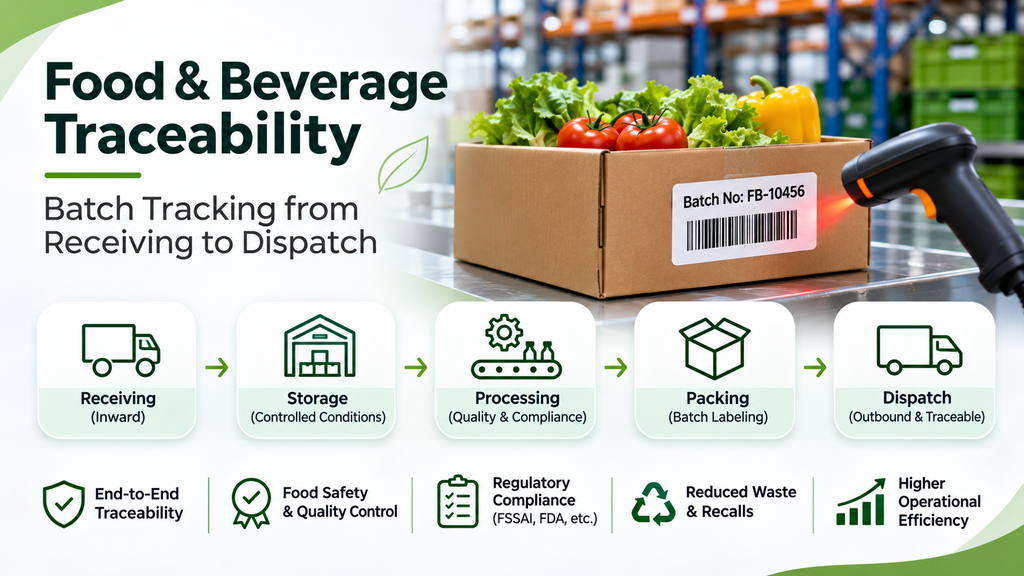
This guide explains food & beverage traceability through batch tracking from receiving to dispatch — why it matters, how it works, and the benefits for safety, compliance, and efficiency.
▶ Watch: Brilliant Info Systems on YouTube
What You’ll Learn
- Why traceability is critical in food & beverage
- How batch tracking works, stage by stage
- The technology behind it
- The benefits for safety, compliance, and cost
Why Traceability Is Critical
Food production is a chain of transformations — raw materials become ingredients, ingredients become a production batch, and batches become packaged products shipped across the supply chain. If anything goes wrong at any point, you need to answer two questions instantly: which products are affected, and where are they now? Without traceability, the only safe answer is to recall everything.
The stakes are high. A single case of foodborne illness traced to your product can mean a sweeping recall, legal liability, and lost trust. Regulations such as the Food Safety Modernization Act demand that food manufacturing businesses can trace products both forward and back. Strong traceability turns a potential disaster into a precise, limited action — pulling only the affected lots, fast.
How Batch Tracking Works
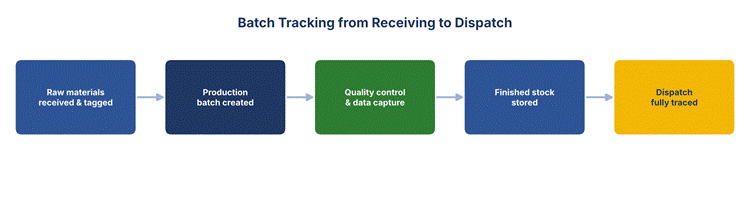
Batch tracking records the identity and history of every batch as it moves through the plant. Each stage adds to the traceability data:
- Receiving: Incoming raw materials are logged with their supplier lot and unique identifiers, starting the record.
- Production: As ingredients combine into a production batch, the system links every input to the new batch, with its own serial numbers.
- Quality control: Test results, expiration dates, and checks are captured against the batch, so quality control data travels with the product.
- Storage: Finished goods are stored with their batch and expiry date, enabling correct stock rotation.
- Dispatch: As products ship, the batch and destination are recorded — completing full traceability from receiving to dispatch.
With automatic data capture at each step, the record is complete and accurate without staff keying anything by hand — the foundation of reliable lot tracking.
The Technology Behind It
Modern batch tracking systems replace paper logs with automatic identification and real time data. RFID technology and barcode-based RFID tracking capture each batch’s unique identifiers as it moves, feeding food traceability software that stores the full history. Where live location matters, RTLS solutions add real-time positioning.
The result is a single digital thread linking raw materials, production, quality control, and dispatch. Integrated with quality inspection, inventory visibility, and asset tracking and built on reliable IoT sensors, it gives food manufacturing complete, audit-ready traceability across the plant.
The Benefits
Batch tracking pays off across safety, compliance, and operations in food production:
| Benefit | What It Means |
| Fast, targeted recalls | Pull only the affected batches instead of everything — limiting cost and damage. |
| Regulatory compliance | Meet Food Safety Modernization Act and audit requirements automatically. |
| Less waste | Accurate expiry date tracking and rotation cut spoilage. |
| Better quality | Link defects back to their source batch for fast root-cause analysis. |
| Customer trust | Provable safety and provenance protect your brand. |
Above all, traceability protects people. Being able to isolate a problem batch in minutes — rather than guessing — is what keeps unsafe product off shelves and your business out of the headlines.
Why Manual Traceability Falls Short
Many food and beverage businesses still rely on spreadsheets, paper batch sheets, and manual scans at a few points. It works until the day it is tested — and then the gaps show:
- Slow recalls: Tracing a batch by hand through paper records can take days, during which unsafe product stays on shelves.
- Human error: A mistyped lot number or a missed scan breaks the chain, leaving blind spots in the traceability data.
- Incomplete history: Manual systems rarely capture every ingredient, test, and movement, so the record is partial at best.
- Audit stress: Pulling records together for an inspection becomes a scramble instead of a click.
Automated batch tracking systems close these gaps. By capturing every unique identifier automatically and in real time, they give food manufacturing a single, trustworthy record — so when a recall or audit comes, the answer is immediate and precise rather than a frantic search through binders.
Getting Started
The best approach is to start where the risk is highest and expand. Begin by tagging incoming raw materials and the highest-volume production batch lines, prove the time saved on a mock recall, then extend tracking across every stage from receiving to dispatch. A good partner will match the food traceability software and hardware to your plant and scale it as you grow, so traceability strengthens with the operation rather than stalling at one line.
Conclusion
In food and beverage, traceability is not optional — it is the difference between a precise, limited recall and a brand-ending crisis. Batch tracking from receiving to dispatch gives you a complete, real time record of every product’s journey, supporting food safety, regulatory compliance, and efficient operations. For any food manufacturing business, it is one of the smartest investments you can make.
Brilliant Info Systems builds traceability and batch tracking systems for food and beverage manufacturers. Explore our RFID technology and manufacturing solutions, or talk to our team to make your plant fully traceable.
Frequently Asked Questions
What is batch tracking in food and beverage?
It is the recording of each batch’s identity and history — from raw materials through production and quality control to dispatch — using unique identifiers so you can trace any product forward and back across the supply chain.
How does traceability help with recalls?
It lets you identify exactly which batches are affected and where they were shipped, so you recall only those lots instead of all product. This limits cost, waste, and brand damage while protecting consumers from foodborne illness.
Does batch tracking help with compliance?
Yes. It creates the automatic, time-stamped traceability data that regulations like the Food Safety Modernization Act require, giving auditors a complete record of every batch from receiving to dispatch.
What technology is used for food traceability?
RFID and barcode data capture, food traceability software, and real-time tracking record each batch’s unique identifiers and history. Together they replace paper logs with an accurate, searchable digital record.